
Rupom Acharjee
Update: 14:56, 25 June 2026
Reporting Is the Lifeblood of Journalism
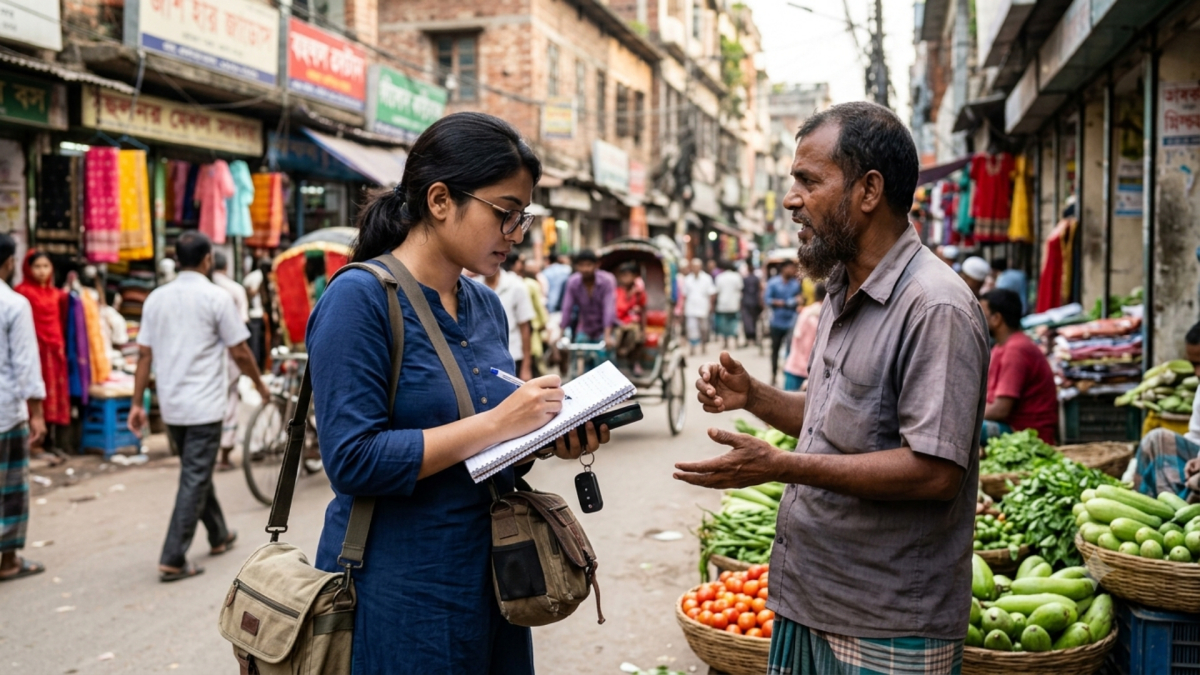
Images created with AI technology.
The core strength of journalism lies in reporting. Gathering information from the field, uncovering the truth, and presenting it to the public in the interest of society are the primary responsibilities of a journalist. Whether in newspapers, television, or digital media, field reporting remains the driving force of journalism. Through reporting, social irregularities, corruption, injustice, abuse of power, and public concerns are brought to light.
Unfortunately, in Bangladesh, many journalists face threats, attacks, harassment, and legal intimidation while carrying out their professional duties. Reporters investigating corruption, land grabbing, illegal sand extraction, drug trafficking, environmental destruction, political violence, and other forms of misconduct often find themselves at significant risk.
Across the country, incidents of physical attacks on journalists during news gathering continue to occur. Cameras are damaged, mobile phones are confiscated, and journalists are subjected to smear campaigns on social media designed to intimidate and silence them. In many cases, perpetrators escape accountability, leading to the recurrence of such incidents.
The media is often described as the fourth pillar of the state because a free and independent press plays a crucial role in ensuring transparency and accountability. When journalists are unable to perform their duties safely, the public's access to truthful information is compromised. As a result, democracy, good governance, and transparency suffer.
The rapid advancement of information technology has accelerated the pace of news dissemination. However, it has also increased the challenges journalists face. Field reporters must now navigate not only the demands of gathering accurate information but also various forms of pressure and risk. In many cases, influential groups and vested interests attempt to obstruct the publication of factual reports.
Ensuring the safety of journalists is not solely the responsibility of the state; it is also a responsibility shared by society. When a journalist exposes wrongdoing or highlights public concerns, they are serving the interests of the broader community. Attempts to silence journalists through intimidation or violence are contrary to democratic values and freedom of expression.
An environment that supports independent journalism, professional security, and legal protection is essential for the publication of truthful and objective news. Every incident of violence or harassment against journalists should be thoroughly investigated, and those responsible must be held accountable. Ending the culture of impunity and ensuring a safe working environment for media professionals are urgent priorities.
Journalism is not a battle against individuals or groups; it is a profession dedicated to standing on the side of truth. Reporting is the primary means through which this responsibility is fulfilled. It is therefore fair to say that reporting is the lifeblood of journalism. The stronger the reporting, the brighter the light of truth will shine across society, and the stronger the foundations of democracy will become.
Rupom Acharjee, Reporter, The Daily Observer










- Tortoise: A Fascinating Creature of Patience and Longevity
- How Are You Meaning in Bangla – A Simple Guide
- The value of `Mohanagar` stretches far beyond social media hype
- What is Amazon Digital?
- Where is the Super Bowl 2025? Your Ultimate Guide
- The Mournful Day
- How to Become a Blogger: Your Complete Guide
- When is Memorial Day 2024 USA?
- How to Become a Dermatologist: Your Complete Guide
- What is a Verb? A Deep Dive into the Heart of Language