
Sangram Datta
Update: 16:13, 8 April 2026
Gangesh Deb Roy: A Legacy of Principle and Courage
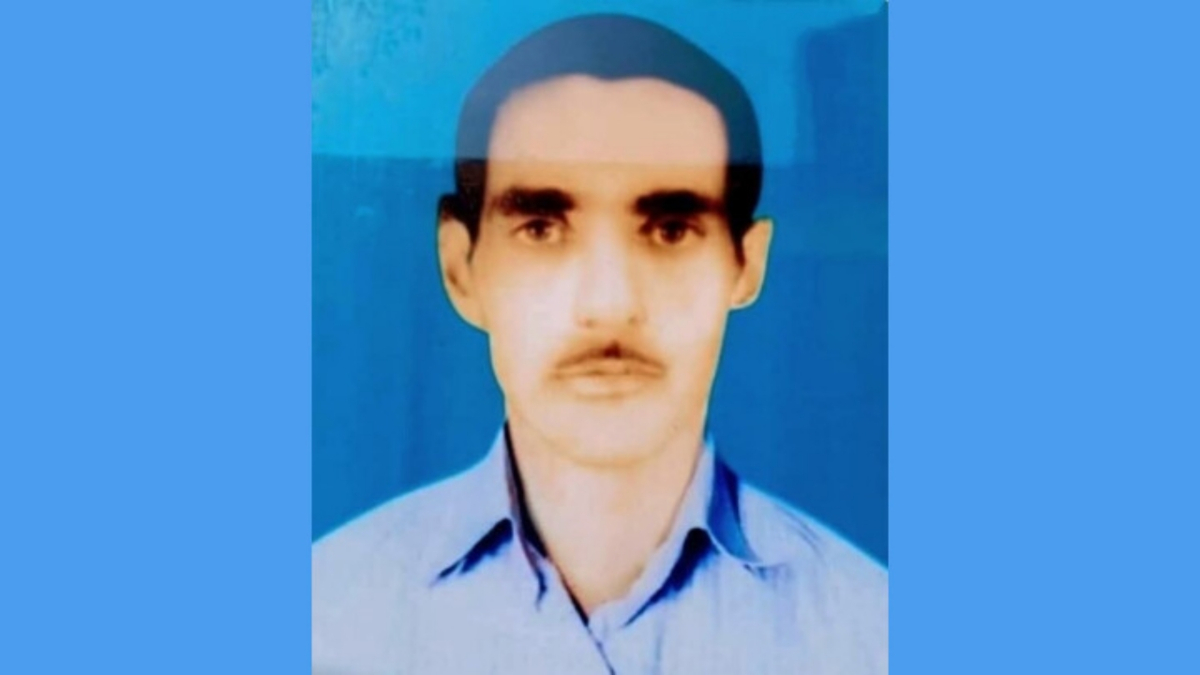
late Gangesh Deb Roy
In the political and social history of Srimangal, in the then Sylhet district of Bangladesh, the late Babu Gangesh Deb Roy is remembered with deep respect. The worthy son of the esteemed Girish Chandra Dev Ray, he was a strong-willed and principled politician.
On February 23, 1974, he was brutally killed by miscreants in the Rustampur area of Bhanubir Union under Srimangal Thana. His death was not only a profound loss for his family but also an irreparable blow to the entire Bhanubir–Mirzapur region and Srimangal.
In the post-independence period, Gangesh Deb Roy emerged as an organizer, a people’s leader, and a dedicated follower inspired by the ideals of Bangabandhu Sheikh Mujibur Rahman. The attack on him occurred while he was returning from a political meeting, casting a deep pall of grief across the area. Although efforts were initially made to apprehend those involved, they later managed to flee. Over time, various discussions and speculations surfaced, but the passage of years has made it difficult to establish concrete evidence.
Gangesh Deb Roy’s contributions extended beyond politics into cultural and sports spheres, where he played the role of a committed patron. His ancestral residence on Moulvibazar Road served as a vibrant hub of intellectual and creative activity. Notable figures, including the late Rangalal Dev Ray and teacher Abdul Gafur, frequently gathered there for music and progressive discussions. Distinguished personalities such as educator Priti Ranjan Chakraborty also attended, inspiring younger generations.
In the 1960s, he stood as a symbol of courage. With his refined taste, organizational skill, and dynamic personality, Gangesh Deb Roy became a role model for his contemporaries. Under his encouragement, regular sporting events—particularly badminton—were organized. His family also made notable contributions to education and social development, with institutions such as the school named after his elder brother Gopendra Deb Roy and Gopendraganj Bazar continuing to carry that legacy.
His ancestral home lies in Bade Alisha village of Bhanubir Union, and he remained deeply connected to his roots while dedicating himself to public service.
To the present generation, his political acumen, organizational leadership, and courage in challenging times may seem almost legendary. From today’s vantage point, it is not easy to fully grasp the risks of that era’s political climate, the uncompromising stance on principles, and the personal bravery it demanded. Gangesh Deb Roy viewed politics not as a means of personal gain, but as a commitment to public service. His direct engagement with people, clarity of position, and organizational strength set him apart.
Among those remembered in Srimangal for their strong ideals and leadership, Gangesh Deb Roy stands prominent. Alongside him, figures such as Kshirode Behari Deb Chowdhury (K.B. Dev Chowdhury), Dr. Suryamani Deb, Laku Datta Chowdhury, Jatindra Mohan Datta Chowdhury, Rasendra Datta Chowdhury, Mohammad Shahjahan Mia, and Dr. Abdul Ali are also notably recognized in the region’s history.
Gangesh Deb Roy’s life remains a shining example of ideals, courage, and public engagement. On the 52nd anniversary of his death, people of the region remember with reverence a compassionate, principled, and resolute leader whose ideals continue to inspire.
EN/SA








- Tortoise: A Fascinating Creature of Patience and Longevity
- How Are You Meaning in Bangla – A Simple Guide
- The value of `Mohanagar` stretches far beyond social media hype
- What is Amazon Digital?
- Where is the Super Bowl 2025? Your Ultimate Guide
- The Mournful Day
- How to Become a Blogger: Your Complete Guide
- When is Memorial Day 2024 USA?
- How to Become a Dermatologist: Your Complete Guide
- What is a Verb? A Deep Dive into the Heart of Language