
Sangram Datta
When Rumor Becomes a Death Sentence

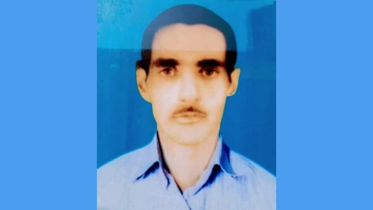
Symbolic image
The killing of a Hindu garment worker at Valuka in Bangladesh, should trouble anyone who believes that the rule of law is more than a slogan. According to a report published by BBC News Bangla on December 20, 2025, the man was beaten and burned to death by a mob after allegations that he had insulted religion. Yet investigators later acknowledged a crucial fact: there was no direct evidence that he had done so.
That absence of proof is not a minor detail. It is the central tragedy of this case. The Rapid Action Battalion, Bangladesh’s elite law enforcement unit, has said it could not find a single witness who personally heard or saw the victim make any blasphemous remark—online or offline. No social media post. No firsthand testimony. What existed instead was rumor, amplified by fear, anger, and collective irresponsibility. In that environment, accusation alone became sufficient grounds for execution. Mob violence rarely erupts in a vacuum.
In Valuka, it was enabled by delay and abdication of responsibility. As tensions grew inside the factory where the victim worked, management reportedly chose to push him outside in the name of “protecting the factory.” Police were notified hours later. By then, control had already passed from institutions to the crowd.
This was not merely a failure of judgment; it was a failure of duty. When employers, local authorities, and law enforcement hesitate in moments of rising communal tension, the consequences are often irreversible. Neutrality, in such moments, becomes complicity.
The human cost of that failure extends far beyond the victim himself. As reported by the Bangladeshi daily Ajker Patrika on December 19, 2025, the man—Dipu Chandra Das—was the sole breadwinner of his family. He leaves behind a wife and a child barely old enough to speak. For them, justice is not an abstract concept. It is the difference between survival and destitution.
In the aftermath, misinformation spread quickly online. Some posts falsely claimed that police had handed the victim over to the mob. Authorities deny this, and available evidence supports their denial. Still, the damage was done. Social media once again proved how easily falsehoods can inflame an already volatile situation, obscuring accountability rather than clarifying it.
The Valuka killing is not an isolated episode. It reflects a broader and deeply troubling pattern in which allegations of religious offense—unverified and often fabricated—are allowed to override legal process. When rumor replaces evidence, and crowds replace courts, no minority, no worker, and ultimately no citizen is safe.
Justice in this case cannot end with arrests alone. Accountability must also extend to those whose inaction created the conditions for violence. And it must include concrete support for the family left behind—financial assistance, legal aid, and long-term rehabilitation.
Anything less would reduce justice to a performance rather than a remedy. Bangladesh’s leaders have spoken of a “new Bangladesh,” one grounded in fairness and the rule of law. That promise will remain hollow unless the country confronts a hard truth: laws are not tested in moments of calm, but in moments of fear. And in Valuka, fear won. The question now is not only who killed Dipu Chandra Das. It is whether his death will be allowed to fade into yet another headline—or whether it will force a reckoning with how easily rumor can still become a death sentence.
Sangram Datta, Freelance journalist.
EYENEWS/SA









- Tortoise: A Fascinating Creature of Patience and Longevity
- How Are You Meaning in Bangla – A Simple Guide
- The value of `Mohanagar` stretches far beyond social media hype
- What is Amazon Digital?
- Where is the Super Bowl 2025? Your Ultimate Guide
- The Mournful Day
- How to Become a Blogger: Your Complete Guide
- When is Memorial Day 2024 USA?
- How to Become a Dermatologist: Your Complete Guide
- What is a Verb? A Deep Dive into the Heart of Language