Dr. Azizul Ambya
Update: 12:59, 18 April 2026
Democracy Under Threat from Silent Militancy
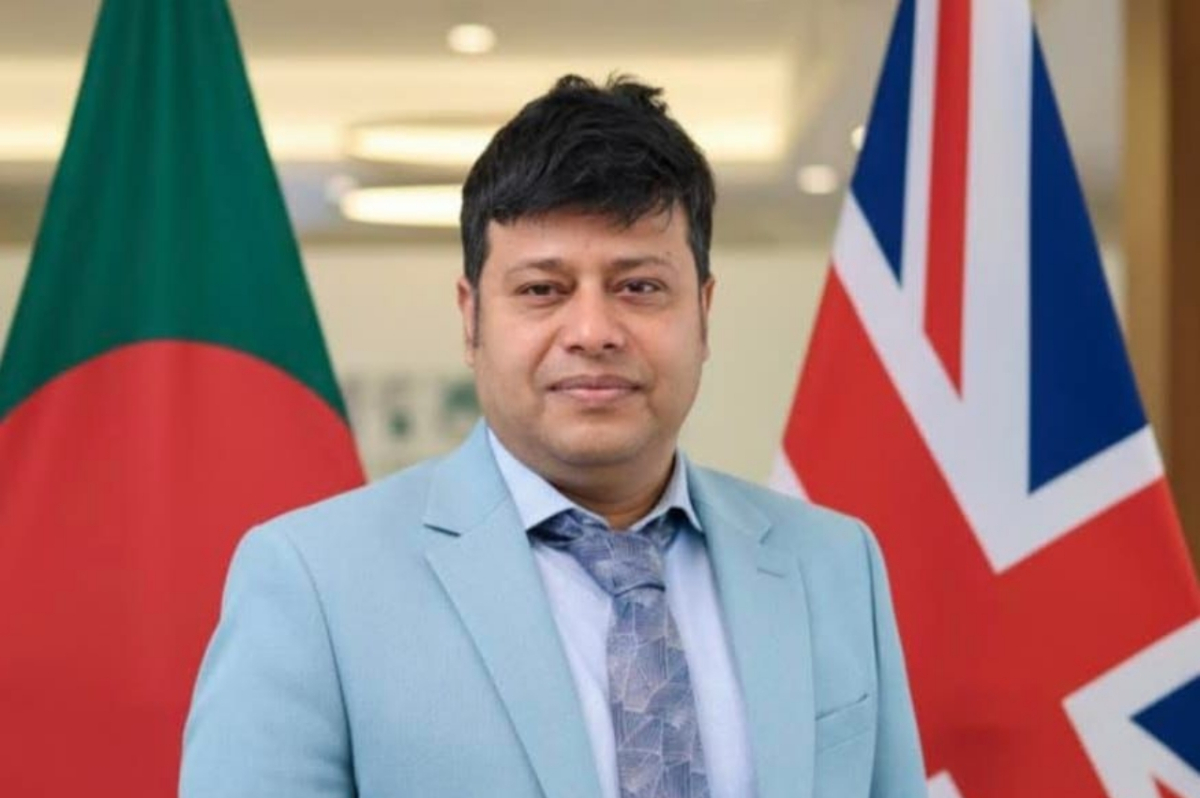
Dr. Azizul Ambia
Bangladesh is currently standing at a critical political crossroads. Internal security, the electoral process, international relations, and the future character of the state have collectively created a deep sense of uncertainty. At the heart of this uncertainty lie several fundamental questions—questions that the state has long sought to avoid, but can no longer afford to ignore.
The first and most sensitive of these questions concerns militancy and terrorism. Under Article 7(1) of the Constitution of Bangladesh, all powers of the Republic belong to the people, and safeguarding their lives and security is a core obligation of the state. Article 32 further guarantees the right to life and personal liberty. When examined through this constitutional framework, state silence on militancy is not merely a political choice; it suggests an abdication of constitutional responsibility.
Although Bangladesh has not experienced major militant attacks in recent years, security analysts continue to warn that militancy has not disappeared—it has transformed. The threat has shifted from visible organisations and large-scale violence to ideological regeneration, online radicalisation, and dormant yet structured networks operating quietly beneath the surface. In such a context, the absence of a clear, proactive, and transparent state policy risks undermining the democratic principles enshrined in Article 11 of the Constitution.
Closely linked to this concern is the issue of elections. Articles 66 and 119 of the Constitution emphasise representative governance and the independence of the Election Commission. An election aligns with constitutional spirit only when it is inclusive, competitive, and credible. Against this standard, ongoing discussions about organising elections while effectively excluding the Awami League—one of the country’s largest political parties—raise unavoidable constitutional and democratic questions.
Regardless of how one assesses the Awami League politically, it remains a central actor in Bangladesh’s political landscape. Excluding such a force from the electoral process fundamentally weakens political competition. Elections held under such conditions may be procedurally legal, but their political legitimacy would remain deeply contested. Bangladesh has already paid a heavy price for so-called “eye-wash” elections in the past. Repeating that trajectory would further erode public trust and institutional credibility.
These domestic challenges are compounded by growing international concern. In Western policy circles, an increasingly prominent question is being asked: is Bangladesh gradually drifting toward an ideologically Islamic state? This perception has not emerged overnight. State tolerance toward Jamaat-e-Islami, political accommodations with Islamist forces, and persistent ambiguity regarding secularism have all contributed to this narrative.
Yet the Constitution leaves little room for ambiguity. Article 12 unequivocally enshrines secularism as a foundational principle, rejecting communalism, religious politics, and state preference based on faith. When state actions and political compromises fail to visibly reflect this commitment, international scepticism becomes inevitable. Such scepticism carries real consequences, influencing trade relations, development cooperation, visa policies, and diplomatic engagement.
Within this broader context, the role of the armed forces has also come under renewed scrutiny. Article 61 of the Constitution places the military firmly under civilian authority and mandates its service to the Republic. Recent developments involving Army Chief General Waker-Uz-Zaman have therefore drawn attention, particularly the provision of state security to a convicted individual in connection with Tarique Rahman’s return, alongside perceived accommodation toward Jamaat-e-Islami.
From a legal perspective, extending state security to a convicted individual cannot be viewed solely as a humanitarian gesture; it carries significant political symbolism. Historically, the military has been regarded as a pillar of stability in Bangladesh. Consequently, any action that appears to signal political alignment or future political engineering invites heightened scrutiny. The country’s history offers a clear lesson: whenever the military has been perceived as shaping political outcomes, democratic institutions have suffered.
All these issues converge into a central concern: is Bangladesh moving toward a “managed democracy”? A system where elections exist without genuine competition, stability is prioritised over accountability, and silence replaces constitutional debate?
This is not an unfamiliar path for Bangladesh. Past experience demonstrates that such controlled political arrangements ultimately lead to deeper and more destabilising crises.
Today, Bangladesh faces a clear choice. One path leads toward constitutional clarity, inclusive politics, and principled courage. The other relies on silence, political accommodation, and managed outcomes. While the latter may offer short-term comfort, it weakens the state in the long run.
Democracy is not sustained by elections alone. It depends on the right to question, the space to dissent, and the state’s willingness to be held accountable. That democratic space is steadily shrinking.
The question, therefore, is stark: will the state acknowledge its constitutional responsibilities and confront these challenges openly, or will silence continue to be treated as a safe political strategy?
History will eventually deliver its verdict. By then, however, much valuable time may already have been lost.
Dr. Azizul Ambya, Author, Columnist & Researcher.
EN/SHA






- Tortoise: A Fascinating Creature of Patience and Longevity
- How Are You Meaning in Bangla – A Simple Guide
- The value of `Mohanagar` stretches far beyond social media hype
- What is Amazon Digital?
- Where is the Super Bowl 2025? Your Ultimate Guide
- The Mournful Day
- How to Become a Blogger: Your Complete Guide
- When is Memorial Day 2024 USA?
- How to Become a Dermatologist: Your Complete Guide
- What is a Verb? A Deep Dive into the Heart of Language