Hasanat Kamal, NORTH EAST COAST
Update: 19:55, 30 July 2026
Volunteers defy official advice to cleanup North East nurdle spil
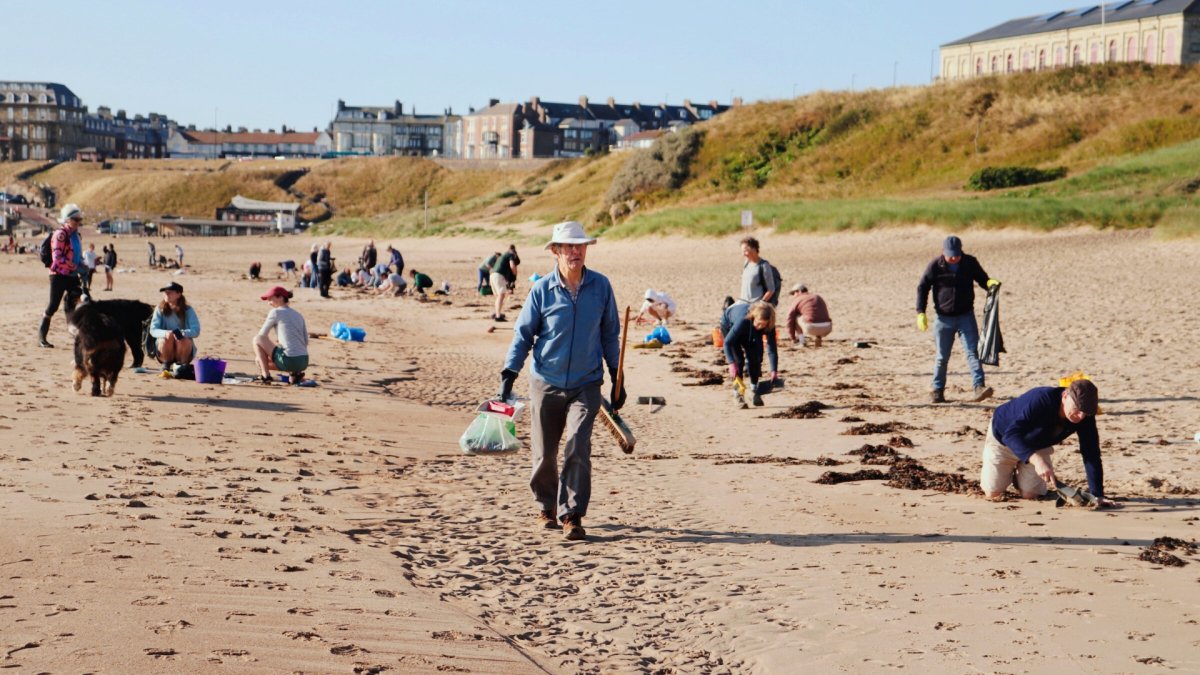
Picture: Eye News
Around 1,000 residents have taken to North East beaches to clear an estimated one billion plastic pellets following a major shipping collision at the Port of Tyne.
A massive community-led rescue operation is underway along the North East coast, as around 1,000 residents defy official warnings to clear a catastrophic spill of industrial plastic pellets, known as "nurdles".
Volunteers warn that the next few days represent a critical window to prevent the pollution from spreading further into marine ecosystems. The spill occurred on Monday 19 July following a collision between the offshore installation vessel Wind Orca and the berthed container ship BG Orange at the Port of Tyne.
Environmental charity Fidra estimates that 25 tonnes of the tiny white pellets entered the water, making it one of the largest recorded nurdle spills in UK history.
While the Port of Tyne, HM Coastguard, the Environment Agency, and local councils are leading official containment efforts, residents argue the statutory response has been far too slow.
Community Mobilisation
Frustrated by restrictions, locals organised mass clean-ups through WhatsApp and social media. On Monday 27 July, coordinated groups launched operations across 11 beaches stretching from Seaton Sluice to Sunderland.
Using hand-sewn mesh bags, sieves, and seawater, volunteers are working in grids along the tide line to separate the floating plastic from the sand. Others are painstakingly shaking washed-up seaweed to release trapped pellets.
The grassroots movement stands in direct opposition to guidance from local authorities. Official advice from North Tyneside Council states: “As a precaution, residents and visitors are being advised not to handle the pellets if they come across them and to keep dogs on leads when visiting affected beaches.”
Frustration with Official Advice
Local business owners and environmental activists have defended their decision to bypass official guidelines.
Alice Laverty, co-owner of Keel Row Books in Whitley Bay, was among the first on the beach. “What made me realise I should get down there and start cleaning up was the contradictory advice we were getting from the council, which said we should avoid touching the nurdles but that the beaches were still safe to enjoy. Both can’t be true at the same time," she said.
“There’s no nurdle fairy, this needs to be cleaned up now," Ms Laverty added, noting that official operations are often delayed by bureaucracy and liability concerns.
Sally McGee, owner of Yonder surf school on Longsands and an ambassador for Surfers Against Sewage, agreed that the official safety warnings were disproportionate. “Our clean-up effort was hindered greatly by the Environment Agency’s guidelines, supported by the council, telling us not to touch the nurdles," she said. "If we’d felt that the council were responding effectively and treating this like the critical emergency that it is, we would not have felt the need to step up.”
Environmental Risks
Although industrial plastic pellets are not inherently toxic, they act as "toxic sponges," readily absorbing harmful chemicals and pollutants from the seawater. Because they resemble fish eggs, they are frequently ingested by seabirds, fish, and marine mammals, causing severe internal injuries or starvation.
“If we don’t clean it up, it’s going to be in our fish and chips supper,” warned Jen Stobs from Seaton Sluice. Ms Stobs has been using her sewing machine to construct mesh recovery bags out of donated scaffolding nets and materials from local businesses. "I’ve made about 60 bags so far which will also eventually get reused by Nurdle UK for future beach clean-ups.”
A Call for Cooperation
Despite North Tyneside Council praising the "passion and commitment" of the community on its website, official guidance still insists that the public should only report sightings rather than collect the plastic.
In response, the volunteer network has established its own strict safety and data-logging protocols based on advice from the organisation Nurdle Hunt. Teams are briefed before every clean, avoid sensitive wildlife habitats, and log the geographical data of their collections to aid future environmental assessments. All recovered pellets are being securely transferred to the relevant authorities for monitored disposal.
Organisers stress they are not seeking a confrontation with the state, but are calling on public agencies to recognise community volunteers as a vital, rapid-response resource during major ecological disasters.
As Cullercoats resident Helen Smith-McGuire observed: “To see a community take over without any need for direct leadership, where people are just stepping up themselves, has been beautiful. We have simply empowered people to do what they already knew they could do.”
EN/SA








- 73 Street in New York is now called `Bangladesh Street`
- Announcement of Ramadan office schedule of Bangladesh Embassy
- Bengali New Year is organized for the first time in Times Square
- Bangladeshi expats in UAE start getting NID cards from June
- Bangladeshi E-Passport service launched in Italy
- Bangladeshi-American promoted to captain in NYPD
- Saudi launched E-Visa for Bangladeshis
- London lights up for the first time to welcome holy Ramadan
- DU teacher Anik Paul missing in USA
- Qatar to enjoy an 11-day Eid Al Fitr holiday