
Imran Al mamun
AGI Future Technology and the Next Era of Human Civilization
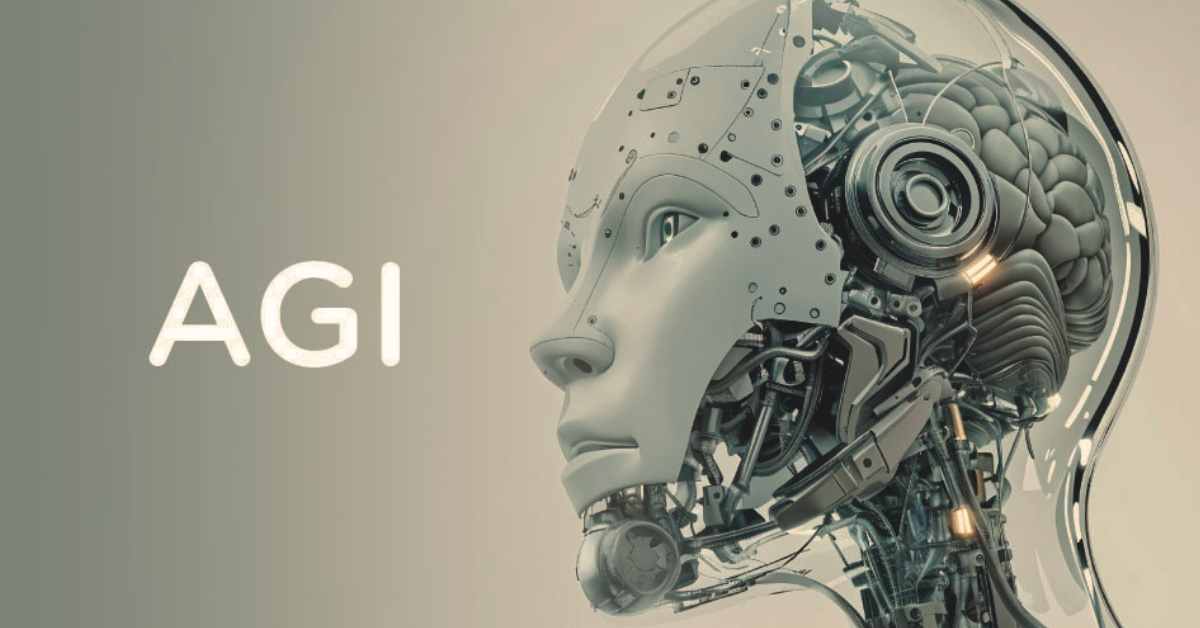
The topic of AGI future technology has become one of the most discussed subjects in the global technology industry. Artificial General Intelligence, commonly known as AGI, represents a future stage of artificial intelligence where machines can think, learn, reason, and solve problems at a level similar to or beyond human intelligence.
Unlike current AI systems that focus on specific tasks, AGI aims to perform a wide variety of intellectual activities without needing separate programming for every situation.
As technology rapidly evolves, researchers, companies, governments, and ordinary people are becoming increasingly curious about how AGI could reshape the world. In 2026 and beyond, discussions around AGI are expected to become even more intense as AI systems continue improving in language understanding, automation, robotics, science, and decision-making.
This complete guide explores the future of AGI technology, its possible impact on industries and society, potential risks, opportunities, and what humanity may expect in the coming decades.
Understanding AGI and How It Differs From Traditional AI
Current artificial intelligence systems are narrow in scope. They are designed to perform specific tasks such as image recognition, language translation, recommendation systems, or voice assistance.
AGI is different because it aims to replicate broad human intelligence. A true AGI system would not only perform one task but also adapt to new challenges, learn independently, and apply knowledge across multiple areas.
For example, current AI may excel at writing text or analyzing data, but AGI would potentially understand complex human reasoning, emotional context, and creative problem-solving across completely different fields.
This difference is why AGI is often considered the next major leap in technology.
Why AGI Future Technology Matters
AGI matters because it could fundamentally transform civilization.
Human history has been shaped by technological revolutions such as electricity, the internet, and industrial automation. AGI could become even more influential because intelligence itself drives nearly every aspect of society.
From healthcare and education to transportation and scientific research, AGI could accelerate innovation at unprecedented speed.
Supporters believe AGI may help solve major global problems including disease, poverty, climate challenges, and resource management.
Critics, however, warn that AGI could also create serious economic and ethical risks if not managed carefully.
The Current State of Artificial Intelligence
Modern AI has already made significant progress.
Language models can generate human-like conversations, image systems can create realistic visuals, and automation tools can complete tasks previously requiring human effort.
Companies worldwide are investing billions into AI research. Universities and research labs are also competing to build more advanced systems.
However, experts generally agree that current AI still lacks true understanding, reasoning depth, and independent general intelligence.
AGI remains a future goal rather than a completed technology.
Industries Most Likely to Change Through AGI
The influence of AGI could spread across nearly every industry.
Healthcare may experience faster medical discoveries, advanced diagnostics, and personalized treatment systems.
Education could become more customized with intelligent tutors adapting to each student’s learning style.
Finance may use AGI for advanced economic forecasting and fraud prevention.
Transportation could see safer autonomous systems capable of handling complex real-world environments.
Scientific research may accelerate dramatically as AGI analyzes massive amounts of data and proposes new theories.
Creative industries may also change as AGI contributes to writing, music, design, filmmaking, and digital content production.
AGI and the Future of Jobs
One of the biggest debates around AGI concerns employment.
Many experts believe AGI could automate tasks currently performed by humans. This may affect both manual labor and knowledge-based professions.
Jobs involving repetitive processes may be replaced first. However, AGI could eventually impact areas such as accounting, customer support, software development, and even creative work.
At the same time, new industries and opportunities may emerge. Human workers may focus more on leadership, ethics, emotional intelligence, strategy, and creativity.
The transition could be challenging, especially for workers unprepared for technological change.
Governments and educational institutions may need to redesign training systems to adapt to the future economy.
AGI and Human Creativity
Some people fear AGI could reduce the importance of human creativity. Others believe it may enhance creativity instead.
AGI tools may help writers generate ideas, assist filmmakers with visual production, or support musicians in composing songs.
Rather than replacing creativity entirely, AGI may become a collaborative partner that increases human productivity.
The relationship between humans and intelligent machines may redefine how art and innovation are created.
Ethical Questions Around AGI
Ethics is one of the most important aspects of AGI development.
If machines become highly intelligent, questions arise about decision-making, privacy, bias, and accountability.
Who controls AGI systems? How should they be regulated? What happens if an AGI system makes harmful decisions?
These concerns are already influencing global discussions among researchers and governments.
Responsible AGI development requires transparency, safety testing, and international cooperation.
Without proper oversight, powerful AI systems could be misused for surveillance, misinformation, or cyber threats.
AGI and Global Competition
Countries around the world are racing to become leaders in AI and future AGI technologies.
The United States, China, the United Kingdom, and several European nations are investing heavily in AI infrastructure and research.
Technology companies are also competing aggressively to create more capable systems.
This competition may accelerate innovation but could also create geopolitical tensions if AGI becomes linked to economic or military power.
Global cooperation may become necessary to ensure safe development.
The Role of Robotics in AGI Future Technology
AGI is often connected with robotics.
An AGI-powered robot could potentially understand environments, interact naturally with humans, and adapt to unpredictable situations.
In factories, hospitals, homes, and public services, intelligent robots could become common.
For example, elderly care robots may assist aging populations, while industrial robots may handle dangerous tasks.
Robotics combined with AGI may reshape labor markets and daily life.
AGI and Education Systems
Education systems worldwide may need major transformation.
Traditional learning models focused on memorization may become less relevant as AGI provides instant information and personalized teaching.
Future education may focus more on critical thinking, creativity, emotional intelligence, and ethical understanding.
Students may learn alongside intelligent systems that adapt lessons in real time.
Teachers may shift from information delivery to mentorship and guidance roles.
AGI in Everyday Life
Future AGI systems may become deeply integrated into daily routines.
Personal assistants could manage schedules, finances, health monitoring, and communication with high-level understanding.
Smart homes may respond intelligently to human behavior and preferences.
Transportation systems may coordinate automatically to reduce traffic and accidents.
AGI could make technology more natural and human-centered.
Risks and Concerns About AGI
Despite its potential benefits, AGI also carries risks.
Uncontrolled AGI systems could make decisions humans cannot easily understand or predict.
Economic inequality may increase if AGI benefits are concentrated among a few companies or countries.
Mass automation could create social disruption if millions lose jobs without support systems.
Security threats may also grow if AGI technology is weaponized or hacked.
Experts stress the importance of safety research before AGI becomes highly advanced.
Can AGI Surpass Human Intelligence
One of the most debated questions is whether AGI could eventually surpass human intelligence.
Some researchers believe superintelligent systems may emerge in the future, capable of solving problems beyond human ability.
Others argue that human consciousness, emotions, and reasoning are too complex to replicate fully.
The timeline for AGI remains uncertain. Some predict breakthroughs within decades, while others believe it may take much longer.
Regardless of timing, AGI discussions are shaping the future direction of technology research.
AGI and the Economy
The global economy may experience major shifts due to AGI.
Businesses using intelligent automation could become more efficient and productive.
Entire industries may evolve or disappear.
Countries investing early in AI infrastructure may gain competitive advantage.
At the same time, governments may need policies for income support, education reform, and workforce transition.
The economic impact of AGI could be as large as the industrial revolution or internet era.
AGI and Human Identity
As machines become more intelligent, people may begin questioning what makes humans unique.
Creativity, emotion, morality, and consciousness may become central discussions.
Some philosophers believe AGI could force humanity to rethink intelligence and existence itself.
The relationship between humans and machines may define the next era of civilization.
Public Interest in AGI Technology
Public curiosity about AGI is growing rapidly.
Movies, books, online discussions, and social media are increasing awareness of intelligent machines.
Young people especially are interested in AI careers and future technology trends.
This growing interest may inspire more innovation and research in the coming years.
Future Predictions for AGI Technology
While no one can predict the future perfectly, many experts believe AGI will continue advancing steadily.
AI systems are becoming more capable every year.
Future breakthroughs may come from better computing power, improved algorithms, and deeper understanding of human cognition.
AGI may not arrive suddenly. Instead, it may develop gradually through continuous improvement.
The next decade could become one of the most important periods in technological history.
The rise of AGI future technology represents one of the most important developments humanity may ever experience. Unlike traditional technologies that improve specific tasks, AGI aims to replicate and possibly surpass human-level intelligence across multiple domains.
Its potential benefits are enormous, including scientific breakthroughs, economic growth, medical advancement, and improved quality of life. At the same time, the risks involving ethics, employment, security, and social change are equally significant.
For individuals, businesses, and governments, understanding AGI is no longer optional. It is becoming essential preparation for the future. Whether AGI arrives sooner or later, its influence on civilization is already beginning to shape conversations, investments, and technological progress around the world.
In the coming decades, AGI may redefine not only technology, but also humanity’s role in an increasingly intelligent world.










- SSC Exam Result check 2026 Bangladesh
- NU Degree Result 2026 Bangladesh: Full Guide
- India Tourist Visa for Bangladeshis Resumes From May 6
- Eid al Fitr 2026 UAE Dates Confirmed and Expected Globally
- Cleaner Job Circular 2026 Saudi Arabia Latest Hiring Update
- Dubai-bound flight catches fire after taking off from Nepal
- Turkey`s homegrown 5th-generation fighter jet named KAAN
- Shihab Chottur reaches Makkah from India in 12 months
- Eid Ul Adha 2023 in Saudi Arabia!
- India gets new parliament building