
Imran Al mamun
The World in 2050 Technology and the Future of Human Civilization

The world in 2050 will likely be dramatically different from the world people know today. Technology is advancing at an extraordinary speed, transforming industries, communication, healthcare, transportation, education, business, and even human lifestyles.
By the year 2050, humanity may enter a completely new technological era where artificial intelligence, robotics, biotechnology, quantum computing, renewable energy, and advanced space exploration redefine civilization itself.
The future has always fascinated people. Every generation imagines what the next decades may look like, but the speed of modern innovation suggests that the changes before 2050 could be larger than most transformations in human history. The digital revolution already changed global society through smartphones, internet connectivity, cloud computing, and social media. However, future technologies may reshape the world even more deeply.
One of the biggest technological forces shaping the world in 2050 will be artificial intelligence. AI is already becoming part of everyday life through virtual assistants, recommendation systems, autonomous software, and advanced data analysis. By 2050, artificial intelligence could evolve far beyond current systems.
Future AI systems may manage transportation networks, healthcare systems, industrial production, agriculture, financial markets, and smart cities with minimal human intervention. Artificial intelligence may become deeply integrated into daily human activities, acting almost like an invisible digital infrastructure supporting modern civilization.
The development of Artificial General Intelligence could become one of the most significant technological milestones before 2050. AGI refers to AI systems capable of human level reasoning, learning, and problem solving across multiple domains. If achieved, AGI could revolutionize science, medicine, engineering, and economic productivity.
Robotics will also become much more advanced by 2050. Robots may not only work in factories but also assist in homes, hospitals, schools, restaurants, transportation systems, and dangerous industrial environments. Humanoid robots capable of communication and physical interaction may become common in some societies.
Automation will likely transform the global workforce significantly. Many repetitive jobs may disappear due to advanced robotics and AI systems. At the same time, new industries and professions related to technology management, AI ethics, robotics engineering, and digital infrastructure may emerge.
The future workplace may become highly automated and digitally connected. Remote work, virtual collaboration, and AI assisted productivity systems could become standard across industries. Traditional office structures may evolve into flexible hybrid environments supported by immersive digital communication.
Virtual reality and augmented reality technologies are expected to become much more sophisticated by 2050. People may work, study, shop, socialize, and attend events in highly realistic virtual environments. Digital worlds may become an important extension of physical society.
Education systems may also change dramatically. AI powered personalized learning could replace many traditional classroom methods. Students may learn through immersive simulations, intelligent tutoring systems, and virtual educational environments designed specifically for their learning style and abilities.
Healthcare technology in 2050 may become extremely advanced. Artificial intelligence could assist doctors in diagnosing diseases with high accuracy. Personalized medicine based on genetic analysis may allow treatments tailored to individual biological characteristics.
Biotechnology and genetic engineering could revolutionize medicine. Scientists may develop advanced therapies capable of preventing or curing diseases that are currently difficult to treat. Gene editing technologies may improve human health and longevity significantly.
Medical nanotechnology may also become important in future healthcare systems. Tiny microscopic machines could potentially repair cells, deliver medicine directly inside the body, or monitor health conditions continuously.
Human lifespan may increase due to technological and medical advancements. Better healthcare, advanced diagnostics, biotechnology, and healthier living systems could allow people to live longer and healthier lives.
The world in 2050 may also see major progress in brain computer interfaces. These technologies aim to connect human brains directly with digital systems. Such interfaces could help disabled individuals regain abilities, improve communication, and potentially expand human interaction with technology.
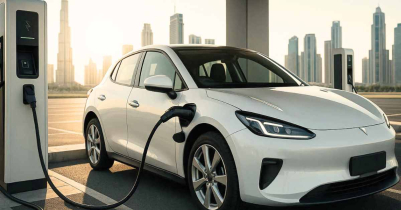
Transportation systems are expected to undergo major transformation by 2050. Electric vehicles may dominate global roads as fossil fuel use decreases. Autonomous self driving cars could become common in cities and highways.
Future transportation networks may rely heavily on artificial intelligence for traffic management, safety optimization, and energy efficiency. Smart transportation systems could reduce accidents, congestion, and pollution significantly.
Flying cars and advanced air mobility systems may also become more realistic by 2050. Several companies are already developing electric vertical takeoff aircraft designed for urban transportation. Future cities may include aerial transportation infrastructure alongside traditional roads.
High speed transportation technologies such as hyperloop systems may connect cities faster than current rail systems. Long distance travel could become more efficient and environmentally sustainable.
Space exploration may become one of the defining technological industries of the future. By 2050, humans may establish permanent bases on the Moon or even begin preparing for Mars colonization. Private space companies and international agencies are investing heavily in advanced space technology.
Satellite systems will likely become even more important for communication, weather monitoring, navigation, agriculture, and global internet access. Space based industries may emerge as commercial opportunities expand beyond Earth.
Renewable energy technology will likely dominate future energy systems. Solar power, wind energy, nuclear fusion research, hydrogen fuel systems, and advanced battery storage technologies may replace much of today’s fossil fuel infrastructure.
Climate change concerns are accelerating investment in sustainable technologies. Future energy systems must support growing populations while reducing environmental damage. Smart grids and decentralized energy production may become standard in many countries.
Smart cities may become a major feature of the world in 2050. These cities will likely use interconnected digital systems to manage transportation, energy, waste, water, security, and communication more efficiently.
Artificial intelligence and Internet of Things devices may monitor urban infrastructure continuously. Traffic lights, electricity systems, public transport, and emergency services could operate through real time data analysis.
Buildings may become highly intelligent and energy efficient. Smart homes equipped with AI systems could automatically manage lighting, climate control, security, and appliance usage based on human behavior patterns.
Agriculture technology will also evolve significantly by 2050. Vertical farming, AI driven crop monitoring, robotic harvesting systems, and lab grown food production may help feed growing global populations.
Climate controlled indoor farming systems may reduce dependence on weather conditions and improve food security in urban areas. Biotechnology could also produce crops resistant to extreme environmental conditions.
The internet itself may evolve into a more immersive and intelligent system. Future digital communication may combine AI, virtual reality, and real time translation technologies to create seamless global interaction.
Quantum computing could become one of the most powerful technologies by 2050. Quantum computers may solve scientific and mathematical problems far beyond the capabilities of current computers. This could accelerate breakthroughs in medicine, materials science, artificial intelligence, and cryptography.
Cybersecurity will become even more important in a highly digital world. As societies depend more on interconnected systems, protecting digital infrastructure from cyber threats will be critical.
Digital currencies and blockchain technology may reshape global financial systems. Central bank digital currencies, decentralized finance, and automated financial systems could become mainstream economic structures.
The entertainment industry will also transform through advanced technology. Movies, games, concerts, and digital experiences may become highly interactive and immersive. AI generated content may become common in music, films, and media production.
Social media may evolve into entirely new forms of digital interaction. Future communication could involve holographic meetings, immersive social spaces, and AI assisted content creation.
Language barriers may largely disappear by 2050 due to advanced real time translation technology. People from different countries may communicate naturally without learning additional languages.
Environmental technology will become essential for protecting ecosystems and managing climate risks. AI powered environmental monitoring systems could track pollution, forest conditions, ocean health, and weather changes continuously.
Water scarcity solutions may include advanced desalination systems, smart irrigation technologies, and atmospheric water generation devices. Sustainable resource management will become increasingly important as populations grow.
The world population in 2050 is expected to exceed nine billion people. Supporting such a large population will require highly efficient food, energy, transportation, and healthcare systems.
Ethical challenges will also grow alongside technological progress. Questions about AI rights, data privacy, genetic engineering, automation, surveillance, and human enhancement may become central global debates.
Governments and international organizations may need new legal frameworks to manage advanced technologies responsibly. Balancing innovation with ethical protection will become increasingly complex.
Human relationships with technology may become much deeper by 2050. Digital assistants, AI companions, and immersive virtual environments could change how people interact socially and emotionally.
At the same time, concerns about mental health, digital addiction, and loss of privacy may increase in highly connected societies. Maintaining balance between technology and human wellbeing will remain important.
Economic systems may also change dramatically. Universal basic income concepts, automated economies, and AI driven industries could reshape traditional employment structures.
Developing countries may experience rapid technological growth if internet access, renewable energy, and digital infrastructure continue expanding globally. Technology could reduce some forms of inequality while potentially creating new digital divides.
Education in the future may focus more on creativity, emotional intelligence, adaptability, and critical thinking because automation could replace many routine tasks. Human skills may become more valuable in areas requiring empathy, innovation, and leadership.
The military sector will also evolve through advanced technology. Autonomous drones, cyber warfare systems, AI driven defense systems, and space based security technologies may become increasingly important.
Global cooperation may become more necessary due to shared technological and environmental challenges. Climate change, cybersecurity, pandemics, and AI governance require international collaboration.
The cultural impact of future technology will likely be enormous. Art, music, storytelling, and human creativity may blend with artificial intelligence in entirely new ways.
Despite all these advancements, some experts warn that technology alone cannot solve every problem. Social stability, ethical responsibility, political leadership, and human values will remain critical for building a positive future.
The world in 2050 may become more connected than ever before, but also more complex and dependent on digital systems. Humanity will face both incredible opportunities and significant risks.
Future generations may look back at the early twenty first century as the beginning of one of the greatest technological transformations in human history. The choices made today regarding technology, sustainability, education, and ethics will strongly shape the world of 2050.
In conclusion, the world in 2050 will likely be defined by advanced artificial intelligence, robotics, biotechnology, renewable energy, smart cities, space exploration, and highly connected digital systems. Technology may improve healthcare, transportation, communication, education, and global productivity dramatically.
At the same time, humanity must address ethical, environmental, and social challenges carefully to ensure technology benefits society positively. The future world will not only depend on innovation but also on wisdom, responsibility, and global cooperation.
The technological future of 2050 represents both extraordinary possibility and significant responsibility. Humanity stands at the edge of a new era that could redefine civilization, reshape daily life, and transform the relationship between humans and technology forever.








- Dubai-bound flight catches fire after taking off from Nepal
- Turkey`s homegrown 5th-generation fighter jet named KAAN
- Shihab Chottur reaches Makkah from India in 12 months
- Eid Ul Adha 2023 in Saudi Arabia!
- India gets new parliament building
- Italy will take 82 thousand workers, the is in March
- New digital ID scheme to be rolled out across UK
- Two Sylheti killed in Portugal
- South Asia on the Brink: How Climate Change is Fueling Crisis
- World`s first 3D-printed mosque to be constructed in Dubai