
Imran Al mamun
USA Farming Market Value 2026 and Future Agricultural Industry
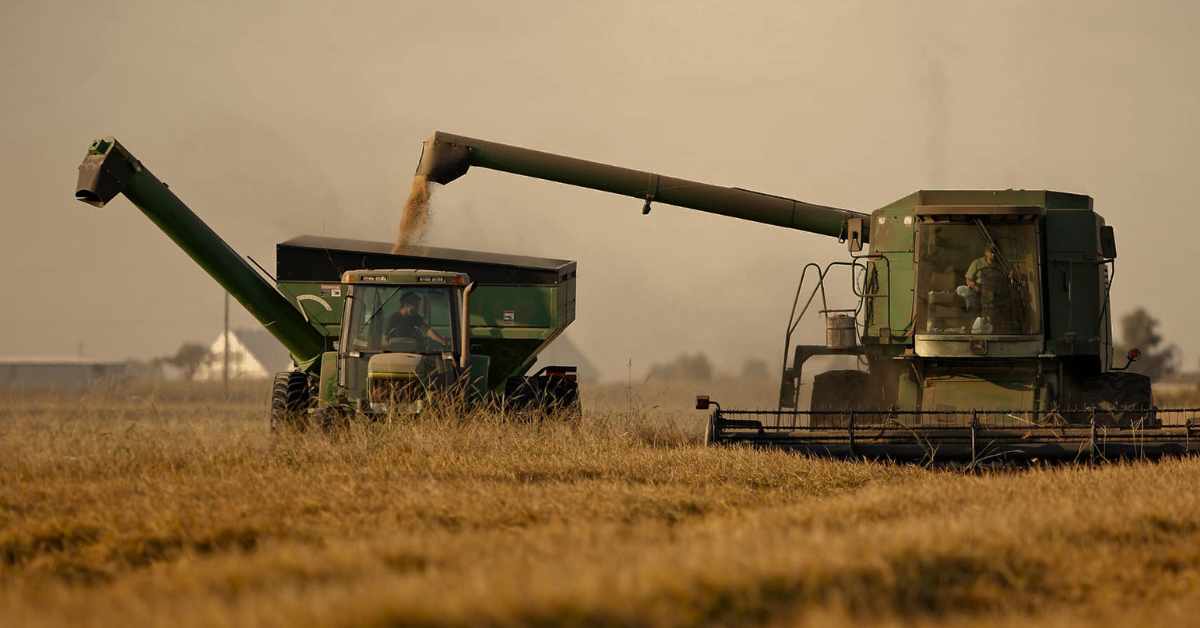
The United States agriculture industry remains one of the most powerful and advanced farming systems in the world. It plays a critical role not only in domestic food supply but also in global export markets.
When analyzing the USA farming market value in 2026, it becomes clear that the sector is going through a complex transformation driven by technology, climate challenges, global demand shifts, and changing economic conditions.
The American farming industry is not just about traditional crop production anymore. It includes large scale agribusiness, livestock production, precision agriculture, biotechnology, agricultural machinery, digital farming systems, and food supply chain industries. All of these combined form a massive economic ecosystem that contributes hundreds of billions of dollars annually to the United States economy.
According to agricultural economic forecasts, the U.S. farm sector continues to generate extremely high output value even though profitability is under pressure in several crop categories. Total farm sector cash receipts and agricultural production value remain at hundreds of billions of dollars, reflecting the strength of the industry even during periods of economic uncertainty. In 2026, the overall U.S. agricultural economy remains highly valuable but also increasingly complex due to rising input costs, global competition, and fluctuating commodity prices.
One of the key insights from 2026 agricultural projections is that farm income and market value are not moving in a single direction. While total production value remains strong, profit margins for many farmers are tightening. Net farm income in the United States is forecast to remain above long term historical averages, even though it shows slight decline compared to previous years. This indicates that the farming sector is stable in scale but facing pressure in profitability structures.
The USA farming market value in 2026 is heavily influenced by crop production such as corn, soybeans, wheat, rice, and cotton, along with livestock industries like beef, poultry, pork, and dairy. Among these, livestock and animal products play a major role in total agricultural cash receipts. However, forecasts show that animal and livestock receipts may decline in 2026 compared to previous years, reflecting volatility in meat and dairy markets.
At the same time, crop production remains a stable foundation of the American agricultural economy. Corn and soybeans are particularly important because they are not only used for food but also for biofuels, animal feed, and export trade. Even with global supply fluctuations, these crops continue to dominate U.S. farming revenue. Forecasts suggest moderate stability in crop cash receipts, with certain segments like corn showing slight growth while others like wheat and rice may decline.
The total U.S. agricultural production value in the broader market is estimated to remain in the range of hundreds of billions of dollars, reflecting the scale of one of the largest agricultural systems in the world. In recent years, overall agricultural gross production value in the United States has been projected to exceed five hundred billion dollars annually, showing consistent global dominance in food production and agricultural exports.
However, the USA farming market in 2026 is not only about size. It is also about transformation. One of the most important changes is the increasing role of technology. Modern American agriculture is becoming highly digitalized, with farmers using satellite data, artificial intelligence, GPS based machinery, drones, and automated irrigation systems. Precision farming techniques allow farmers to reduce waste, increase yield, and improve efficiency in resource usage.
This technological shift is reshaping how the farming economy works. Instead of relying only on manual labor and traditional methods, farmers are now part of a highly data driven system. This includes real time soil monitoring, climate prediction models, automated harvesting systems, and smart supply chain logistics. These innovations increase productivity but also require higher initial investment, which impacts small and medium farmers differently compared to large agribusiness companies.
Another important factor influencing USA farming market value in 2026 is input cost inflation. Farmers are facing higher costs for fertilizers, fuel, labor, machinery, and transportation. These rising expenses reduce overall profit margins even when production remains high. Fertilizer price fluctuations, energy costs, and global supply chain disruptions all contribute to financial pressure in the agricultural sector. Recent global geopolitical tensions and supply chain issues have further increased uncertainty in farming inputs and production costs.
Despite these challenges, the agricultural sector continues to remain resilient. One reason is government support programs and agricultural subsidies. The U.S. government often provides financial assistance to farmers through crop insurance, commodity programs, and disaster relief funding. These policies help stabilize income during periods of market volatility.
Export demand is another major driver of USA farming market value. The United States is one of the largest agricultural exporters in the world, supplying grains, meat, dairy products, and processed food to global markets. International trade plays a crucial role in maintaining the financial strength of American agriculture. However, global competition from countries like Brazil, Argentina, and China continues to influence pricing and export volumes.
Livestock farming remains one of the strongest components of the U.S. agricultural economy. Beef production in particular has shown strong profitability in recent cycles due to limited supply and high demand. Poultry and pork industries also contribute significantly to national agricultural revenue. However, fluctuations in feed costs and disease risks can affect long term stability in livestock markets.
Another emerging trend in USA farming is sustainable agriculture. Environmental concerns are pushing farmers to adopt more eco friendly practices such as soil conservation, reduced chemical usage, water efficient irrigation, and regenerative farming techniques. Sustainability is becoming not only an environmental necessity but also a market demand factor, especially from international buyers and large food corporations.
Climate change is also playing a major role in shaping the farming industry. Extreme weather conditions such as droughts, floods, heat waves, and unpredictable rainfall patterns are affecting crop yields in different regions of the United States. This adds uncertainty to agricultural planning and increases risk for farmers, especially those dependent on weather sensitive crops.
The labor shortage in agriculture is another critical issue. Fewer young workers are entering farming careers, leading to increased dependence on automation and foreign labor programs. Modern farming is increasingly shifting toward machine operated systems, robotics, and AI based decision making tools to compensate for workforce gaps.
Looking at the broader economic structure, agriculture in the United States is not just a primary sector. It is connected to food processing industries, transportation networks, retail supply chains, export logistics, and biotechnology research. This interconnected system multiplies the overall economic value of farming beyond just raw agricultural output.
In 2026, net farm income trends show a mixed picture. While overall income remains historically strong, there is a slight decline compared to previous years due to falling crop returns and increased costs. However, income levels remain above long term averages, which indicates that the industry is still financially stable despite pressure.
Another important dimension of USA farming market value is regional diversity. Agricultural production is not uniform across the country. States like Iowa, Nebraska, Kansas, California, Texas, and Illinois each specialize in different types of farming activities. Some regions focus heavily on grains and oilseeds, while others dominate livestock or specialty crops like fruits, vegetables, and nuts.
The role of biotechnology is also expanding rapidly. Genetically improved seeds, pest resistant crops, and high yield varieties are increasingly used to maximize productivity. This allows farmers to produce more output from the same land area, improving efficiency and profitability in the long term.
Financial markets and agricultural investment funds are also becoming more involved in farming. Large institutional investors now participate in farmland ownership, agribusiness companies, and agricultural technology startups. This increases capital flow into the sector but also raises concerns about consolidation and control of farmland by large corporations.
Digital agriculture platforms are another emerging force. Farmers now use mobile apps, cloud based analytics, and AI driven advisory systems to make real time decisions about planting, harvesting, and selling crops. This digital transformation is reshaping the traditional farming model into a modern data driven industry.
Despite challenges, the USA farming market value in 2026 remains extremely large, stable in global comparison, and strategically important for world food security. Even with profit pressure, rising costs, and climate risks, the sector continues to maintain its position as one of the strongest agricultural systems globally.
In conclusion, the USA farming market in 2026 represents a combination of strength and transformation. It is a multi hundred billion dollar industry supported by technology, government policy, global trade, and innovation. At the same time, it faces real challenges such as rising costs, climate change, labor shortages, and market volatility.
The future of American agriculture will likely depend on how successfully it adapts to these challenges while continuing to increase productivity and sustainability. With ongoing technological advancement and global demand for food, the USA farming market is expected to remain one of the most influential agricultural economies in the world for many years to come.










- SSC Exam Result check 2026 Bangladesh
- NU Degree Result 2026 Bangladesh: Full Guide
- India Tourist Visa for Bangladeshis Resumes From May 6
- Eid al Fitr 2026 UAE Dates Confirmed and Expected Globally
- Dubai-bound flight catches fire after taking off from Nepal
- Turkey`s homegrown 5th-generation fighter jet named KAAN
- Shihab Chottur reaches Makkah from India in 12 months
- Cleaner Job Circular 2026 Saudi Arabia Latest Hiring Update
- Eid Ul Adha 2023 in Saudi Arabia!
- India gets new parliament building