Moulvibazar Correspondent
আপডেট: ১৭:২৮, ৬ আগস্ট ২০২৬
Use alternative land for solar power plants: Round table meeting
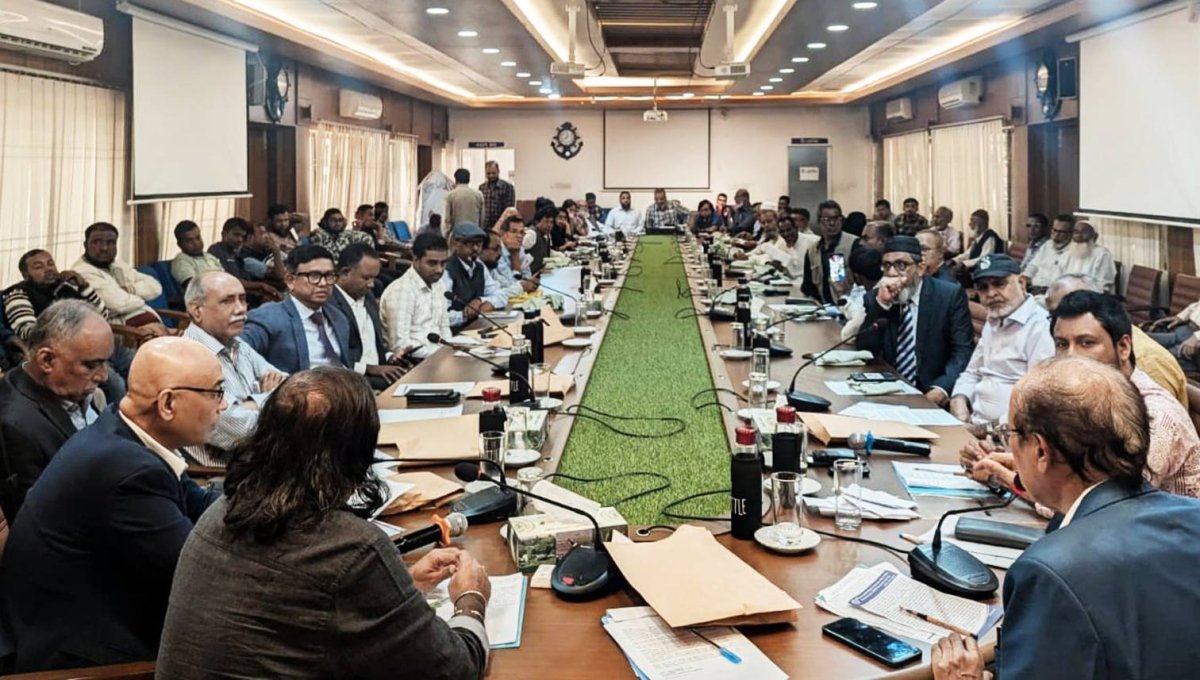
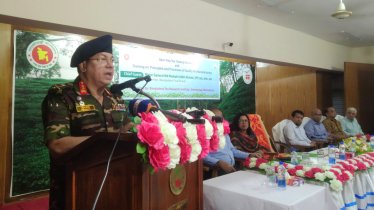
A roundtable in Moulvibazar discussing alternatives to solar projects on wetland.
Discussants at a programme in Moulvibazar on Saturday urged the government for taking steps to use of unproductive and uncultivated land instead of using haor land for installing solar power plants in Moulvibazar.
They made the request in a round table meeting held in the conference room of Moulvibazar deputy commissioner office to protest against the unplanned initiative of installing solar power plant projects at Kawadighi, Hailhaor and Athangiri Puber Haor in the district and demand protection of the haor environment.
Haor Raksha Andolan, Moulvibazar, a platform of environment rights activists, arranged the event in the morning with the theme ‘Bengalis are used to take fish and rice, so join the movement to meet the demand of fish and rice as well as protect agricultural biodiversity.’
The roundtable took place amid growing public concern over the protection of Moulvibazar's haors following Eye News' October 2025 investigative series, Wetlands Under Threat in Bangladesh – Initiatives to Protect. The series documented threats to wetlands, biodiversity and fisheries, highlighted the success of the Baikka Beel community-managed fish sanctuary model, and called for stronger protection of Bangladesh's major haor ecosystems. The reporting contributed to wider public discussion on balancing renewable energy development with wetland conservation.
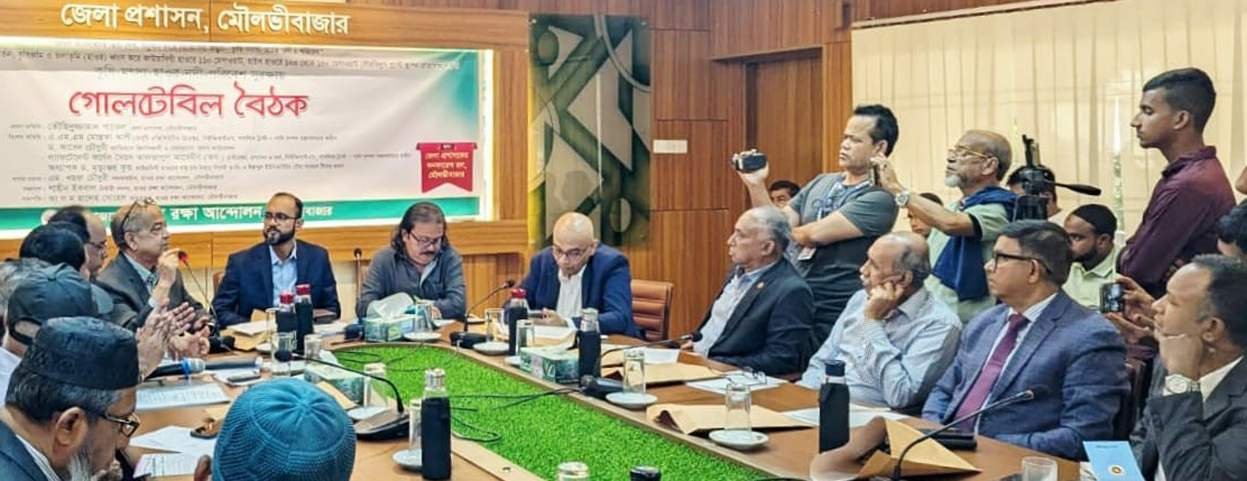
Moulvibazar roundtable discusses alternatives to solar power projects on haor land.
The discussants at the programme alleged that the recent incidents of purchasing and selling of agricultural land in Kawadighi, Hail Haor and Athangiri Puber Haor without any feasibility study and the initiative to set up solar power projects there raised concerns among the local residents.
They said that the work of a 10 MW solar power plant already completed in Athangiri Puber Haor and effort to set another 25 MW solar power plant in the same haor was underway.
Stating that the government has placed a positive example by setting a target to install renewable and environment friendly power projects to generate 500 MW solar power from Moulvibazar district, they claimed that development must be done by protecting biodiversity, agricultural land and fisheries; not by destroying haor and natural landscapes.
Representatives of the farmers and fishermen expressed their fears in the programme that their livelihoods would be seriously affected if the haor land goes to private owned companies.
Haor Raksha Andolan leaders claimed in the programme that there is ample potential for setting up solar power projects without destroying the haor land in the area.
Mentioning there is 64 km open land on the dam of Manu River-Irrigation Project, 2.5 km at Angang area of Tengra union and 105 km land on the main canals and sub-canals of the Manu River-Irrigation Project, they claimed that generation of 500 to 700 MW solar power is possible by setting up projects at these lands.
The experts in the meeting also discussed on the possibility of generating wind power in the haor area. They said that research on wind turbine technology could open up a new horizon for environmental friendly power generation in the country.
They, however, said that the protection of native and migratory birds must be ensured before launching such projects.
Speakers at the roundtable meeting said that the country's resources are limited and its population is high.
So, it is important to protect haors, ensure proper planning, implement of laws and maintain transparency in state land management is a must to leave a liveable environment for future generations, they said, adding that they want solar power but not by destroying wetlands.
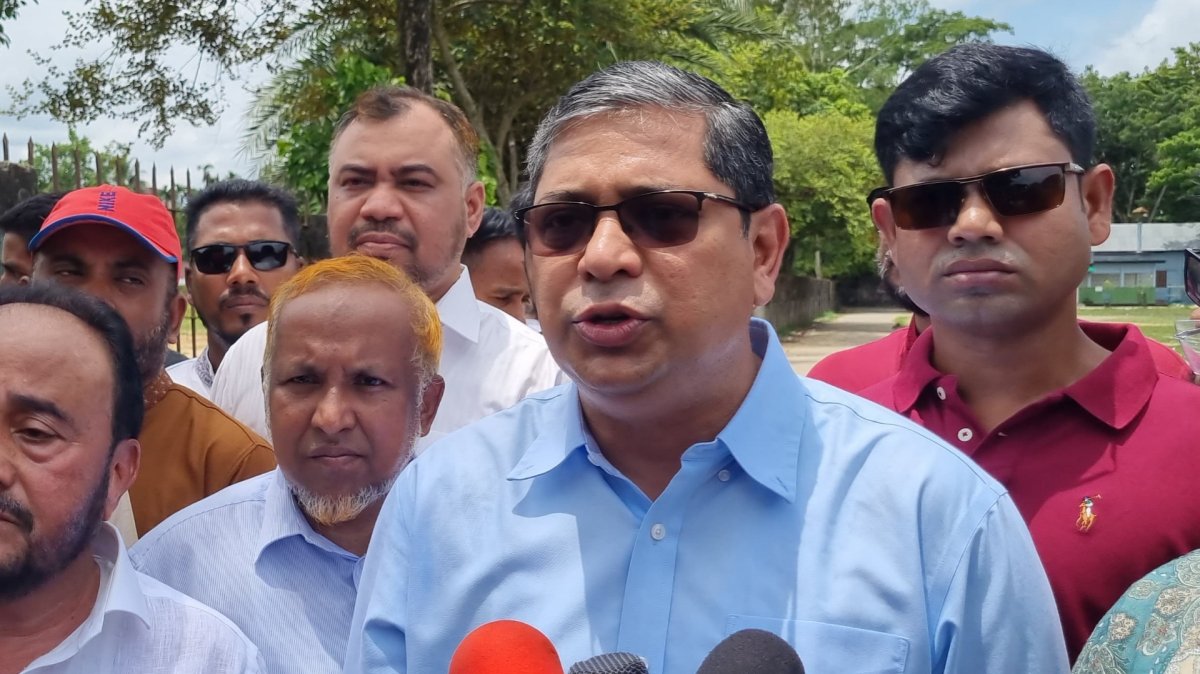
Moulvibazar deputy commissioner Towhiduzzaman Pavel addressed the round table meeting as the chief guest, while Centre for Environment and Geographic Information Service deputy executive director AMM Mostafa Ali, genetic scientist Dr Abed Chowdhury, CEGTS director Retired Lieutenant Colonel Syed Afzalul Abedin, Sylhet Agricultural University’s water resources management professor Nitun Kunda and soil science professor MA Kashem as the specialist guests.
Haor Raksha Andolan, Moulvibazar’s convener ASM Saleh Sohel chaired the programme that was addressed, among others, by its member secretary M Khasru Chowdhury and executive member Shaheen Iqbal.



- দুলাভাইয়ের ধর্ষণের শিকার শ্যালিকা
- মৌলভীবাজারের রাজনগরে
আগুনে পুড়ে ছাই হয়ে গেল বিধবা রুবির বিউটি পার্লার - `প্রধানমন্ত্রীর কথা বলে আমাদের ধোকা দেওয়া হচ্ছে`
- রাখাল নৃত্যের মধ্য দিয়ে কমলগঞ্জে রাস উৎসব শুরু
- কমলগঞ্জে মাদকবিরোধী মানববন্ধন অনুষ্ঠিত
- মেয়ের বাড়িতে ইফতার: সিলেটি প্রথার বিলুপ্তি চায় নতুন প্রজন্ম
- দেশের চতুর্থ ধনী বিভাগ সিলেট
- অবশেষে ক্লাস করার অনুমতি পেল শ্রীমঙ্গলের শিশু শিক্ষার্থী নাঈম
- শ্রীমঙ্গল টু কাতারে গড়ে তুলেছেন শক্তিশালি নেটওয়ার্ক
মৌলভীবাজারে অনলাইন জুয়ায় রাতারাতি কোটিপতি সাগর - এসএসসির ফলাফলে বিভাগে ৩য় স্থানে মৌলভীবাজার