
Kobir Ahmed
Bangladesh Development Debate & Rooppur Nuclear Progress
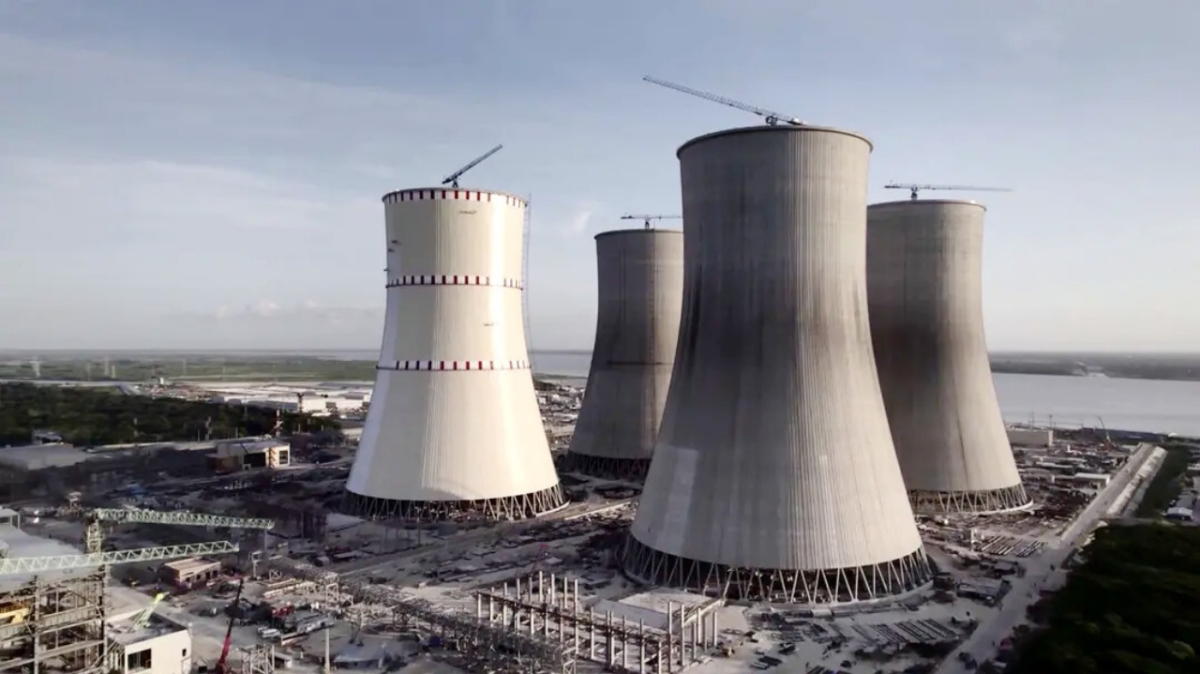
Photo: Collected
There is little room to question the scale of development carried out under the Awami League government. Over the past one and a half decades, the progress achieved during Sheikh Hasina’s tenure has been so extensive that many now wonder whether such momentum could realistically be sustained over the next 50 years.
That uncertainty, in part, stems from what critics describe as severe misgovernance, corruption, and systemic breakdown under the Yunus-era administration.
Allegations of widespread mismanagement and economic disruption have raised concerns about long-term institutional damage.
Particular attention has been drawn to an agreement made with the United States shortly before Yunus left office. Critics argue that the implications of this deal could shape Bangladesh’s policy space for years to come. There is a growing perception that future governments, including that of Tarique Rahman, may face constraints when attempting to push independent economic or strategic agendas.
Some observers go further. They suggest that Bangladesh now finds itself in a position where even routine economic decisions, such as imports, appear influenced by external approval. Whether fully accurate or not, this perception alone signals a deeper anxiety about national sovereignty and policy autonomy.
At the same time, Bangladesh’s long-standing partnership with Russia continues to play a significant role in the country’s energy ambitions. The Rooppur Nuclear Power Plant, developed with Russian support, is now nearing a critical stage. Uranium fuel loading has begun in its first unit, marking a major step toward operational readiness.
If completed as planned, the plant is expected to generate 2,400 megawatts of electricity by 2027 from its two units. Even the initial phase could bring Bangladesh’s power generation capacity close to meeting domestic demand, easing long-standing energy shortages. It is worth recalling that the project faced strong opposition when it was first proposed. Political rivals, alongside sections of environmental activists, raised concerns at the time. Yet the government pressed ahead. In hindsight, supporters argue that ignoring that resistance has brought the country to a decisive moment in its energy journey.
Bangladesh has already achieved nationwide electrification during the Mujib Centenary period. With Rooppur fully operational, the country could significantly reduce its reliance on imported electricity, including supply from India’s Adani Group, and may even move toward export capacity in the longer term.
The timeline reflects a steady, deliberate process. The decision to build the plant was approved in Parliament in 2010. The Bangladesh Atomic Energy Regulatory Act followed in 2012. Formal construction began on 2 October 2013, inaugurated by then Prime Minister Sheikh Hasina. From that point to April 28, 2026, each milestone has brought the project closer to completion.
Development, by its nature, invites debate. Labels may change depending on political perspective. Still, the underlying reality remains difficult to ignore.
Kobir Ahmed, Editor-in-Chief, Sylhet Today










- Tortoise: A Fascinating Creature of Patience and Longevity
- How Are You Meaning in Bangla – A Simple Guide
- The value of `Mohanagar` stretches far beyond social media hype
- What is Amazon Digital?
- Where is the Super Bowl 2025? Your Ultimate Guide
- The Mournful Day
- How to Become a Blogger: Your Complete Guide
- When is Memorial Day 2024 USA?
- How to Become a Dermatologist: Your Complete Guide
- What is a Verb? A Deep Dive into the Heart of Language