Imran
Hormuz Island Red And Why People Across Britain
On a grey morning in Manchester, a young office worker scrolled through his phone while waiting for a delayed train. Among the usual headlines about rent hikes and rising grocery bills, one strange question kept popping up again and again online: Why is Hormuz island red?
It sounds almost like a riddle. Yet across Britain, from university group chats to late-night social media scrolls, curiosity about this unusual place has quietly spread. People aren’t just asking why is Hormuz island red out of scientific interest. In a strange way, it feels like part of the wider moment the country is living through—when the world suddenly feels both bigger and more uncertain.
Life in the UK right now is filled with small pressures. Energy bills still sting every winter. Young professionals in London talk openly about rent that seems to climb faster than their salaries. Families in Birmingham compare supermarket prices with the careful focus of accountants. In that atmosphere, even an oddly coloured island thousands of miles away can become a talking point during lunch breaks.
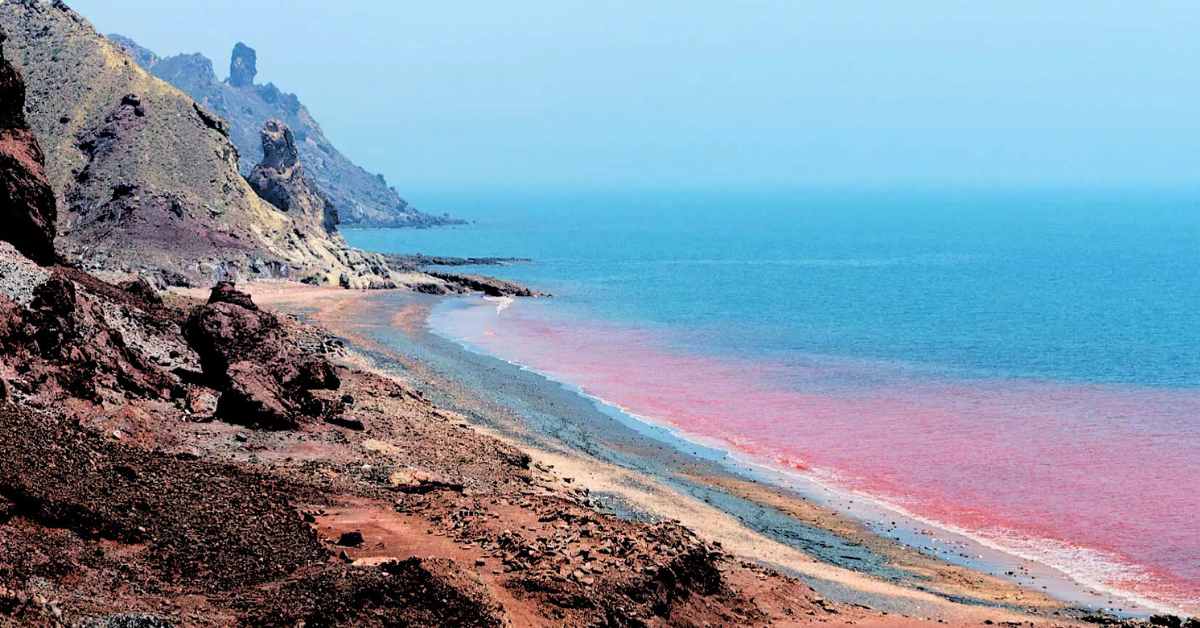
The question itself has a simple but fascinating answer. Why is Hormuz island red comes down largely to geology. The island, sitting in the Persian Gulf, contains huge amounts of iron-rich soil and minerals. Over centuries, oxidation has turned much of the landscape a deep crimson colour. Even the sand on some beaches carries that striking red tint.
But explanations rarely stop curiosity. Once people learn the reason why is Hormuz island red, another layer of fascination begins. Photos of the island show waves washing across red shores, almost like paint dissolving into the sea. To many British viewers used to the pale sands of Cornwall or Brighton’s pebbled coast, the images feel surreal.
In cafés around Leeds and Bristol, it’s the sort of thing that sparks casual conversation. A student studying geography might mention the minerals. Someone else might joke that Britain’s famously grey beaches could use a little colour.
Still, the curiosity surrounding why is Hormuz island red also reflects how people in the UK consume news now. A single unusual story can break through the constant cycle of economic worries. It offers a brief pause from the usual headlines about mortgage rates, inflation figures, or another rail fare increase.
For younger audiences especially, the story carries a quiet sense of wonder. Many grew up scrolling past endless global images online, yet something about that red island stands out. Perhaps it’s the reminder that the world still holds strange, almost unbelievable places.
At the same time, the conversation has a subtle edge of concern. The location of Hormuz sits close to major global shipping routes, and anything linked to that region occasionally triggers discussions about energy supply and trade. When people ask why is Hormuz island red, some also wonder about the wider significance of the place itself.
That mix of curiosity and uncertainty feels very familiar in Britain right now. People are constantly trying to make sense of a world where local struggles—like rent increases or childcare costs—sit alongside distant global events.
And yet sometimes the internet simply latches onto a beautiful mystery. A red shoreline. A question repeated across thousands of screens. Why is Hormuz island red might not solve the country’s cost-of-living worries, but for a moment, it reminds people of something simpler: the strange details of a planet that still manages to surprise us.
Read More: Iran War Update News Today 2026








- SSC Exam Result check 2026 Bangladesh
- NU Degree Result 2026 Bangladesh: Full Guide
- India Tourist Visa for Bangladeshis Resumes From May 6
- Eid al Fitr 2026 UAE Dates Confirmed and Expected Globally
- Dubai-bound flight catches fire after taking off from Nepal
- Turkey`s homegrown 5th-generation fighter jet named KAAN
- Shihab Chottur reaches Makkah from India in 12 months
- Cleaner Job Circular 2026 Saudi Arabia Latest Hiring Update
- Eid Ul Adha 2023 in Saudi Arabia!
- India gets new parliament building